Native vs Cross-Platform App Development: A Practical Guide
If you’re planning a mobile app, one early decision shapes your budget and timeline more than almost any other: building natively for each platform or using a cross-platform framework. Here’s how to think about it without the jargon.
What Native Development Means
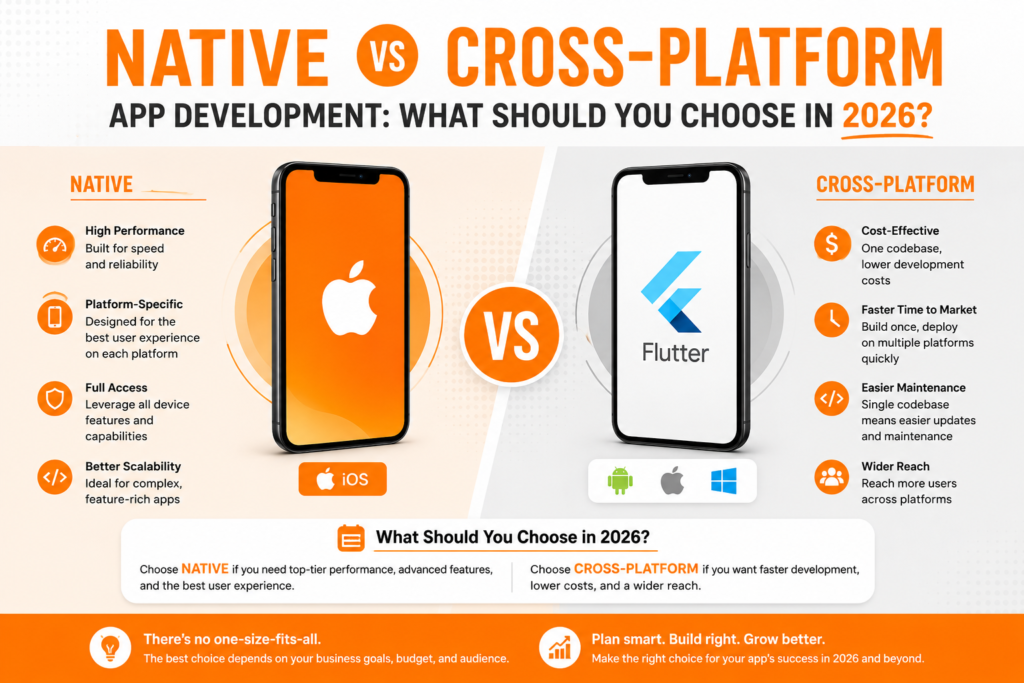
Native apps are built separately for Android and iOS using each platform’s own tools. They deliver the best performance and full access to device features, which matters for graphics-heavy or hardware-dependent apps. The cost is maintaining two codebases.
What Cross-Platform Development Means
Cross-platform frameworks let you write one codebase that runs on both Android and iOS. This usually means lower cost and faster time-to-market, with performance that is excellent for most business apps.
How to Decide
Go native when peak performance, complex animations, or deep hardware integration are essential. Go cross-platform when you want to launch faster, serve both platforms on a tighter budget, and your app is primarily content and forms driven.
Build Your App With the Right Foundation
We help you pick the approach that fits your goals and budget before a single line of code is written.